São Miguel & Santa Maria
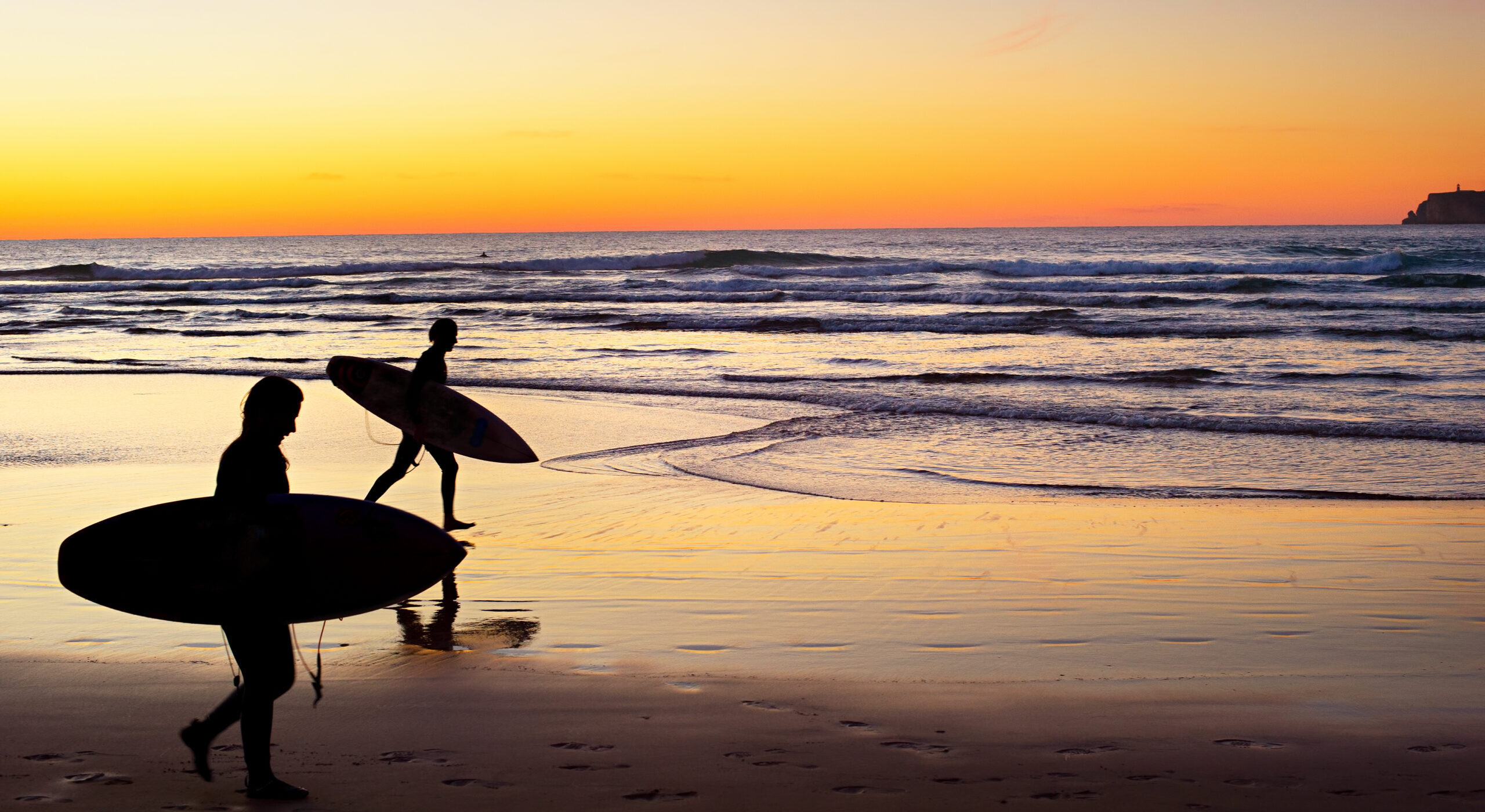
São Miguel offers the widest range of volcanic scenery, geothermal areas and services. Santa Maria adds beaches, drier landscapes and a quieter contrast.

Choose your islands
Each Azores island has a distinct character. Compare landscapes, activities, travel logistics and suggested stays before building your itinerary.
Start with the experience you want
There is no single “best” Azores island. São Miguel is the broadest first introduction, Terceira adds history and culture, Pico and Faial are natural partners for mountain and ocean experiences, São Jorge rewards hikers and slower travel, while Flores and Corvo appeal to travelers drawn to remoteness and dramatic scenery.
The islands also sit in three geographic groups, and that matters when you build a route. A good Azores itinerary balances the experiences you want with the time available and the transportation that actually works on your travel dates.
São Miguel offers the widest range of volcanic scenery, geothermal areas and services. Santa Maria adds beaches, drier landscapes and a quieter contrast.
This is the strongest cluster for multi-island planning, with culture, vineyards, hiking, whale-watching heritage and useful ferry combinations on many dates.
The westernmost islands deliver waterfalls, calderas and a powerful sense of remoteness, but they deserve extra flexibility for weather and transportation.
Explore all nine islands
Use the individual island guides to compare scenery, activities, pace, practical logistics and the amount of time each island deserves.
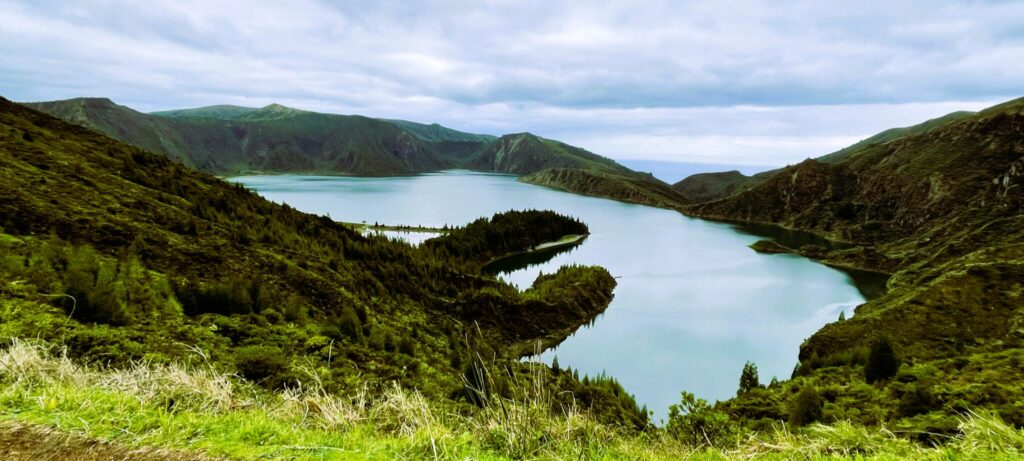
The largest Azores island and the easiest starting point for many first-time visitors, with crater lakes, hot springs, coastal viewpoints and a wide range of experiences.
Read guide →
A strong mix of history, volcanic landscapes, local traditions and an inviting main city centered on Angra do Heroísmo.
Read guide →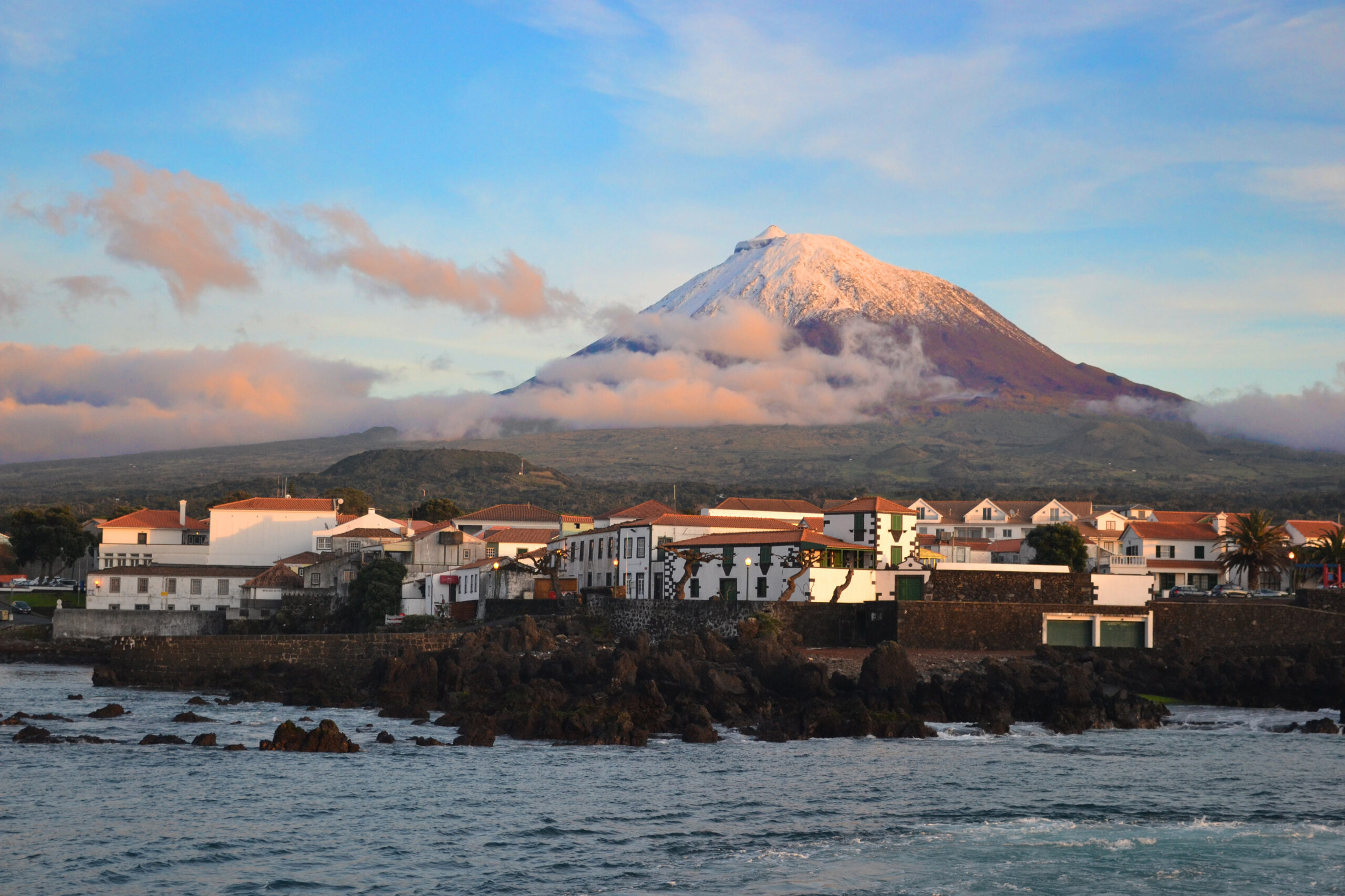
A dramatic Central Group island defined by Portugal’s highest mountain, UNESCO-recognized vineyard landscapes and a strong connection to the sea.
Read guide →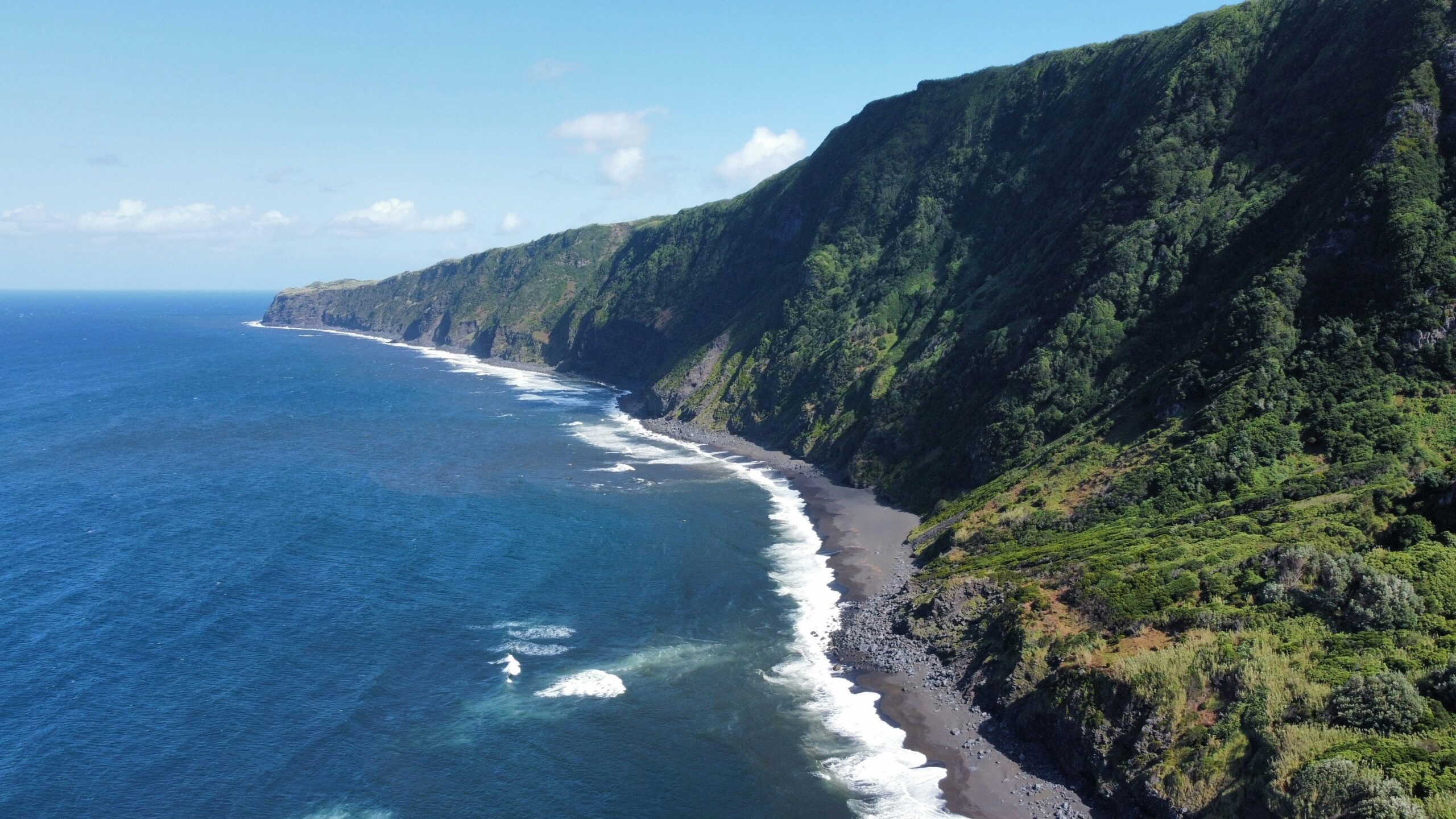
A compact island with Horta’s famous marina, the Caldeira, hydrangea-lined roads and the stark volcanic landscape of Capelinhos.
Read guide →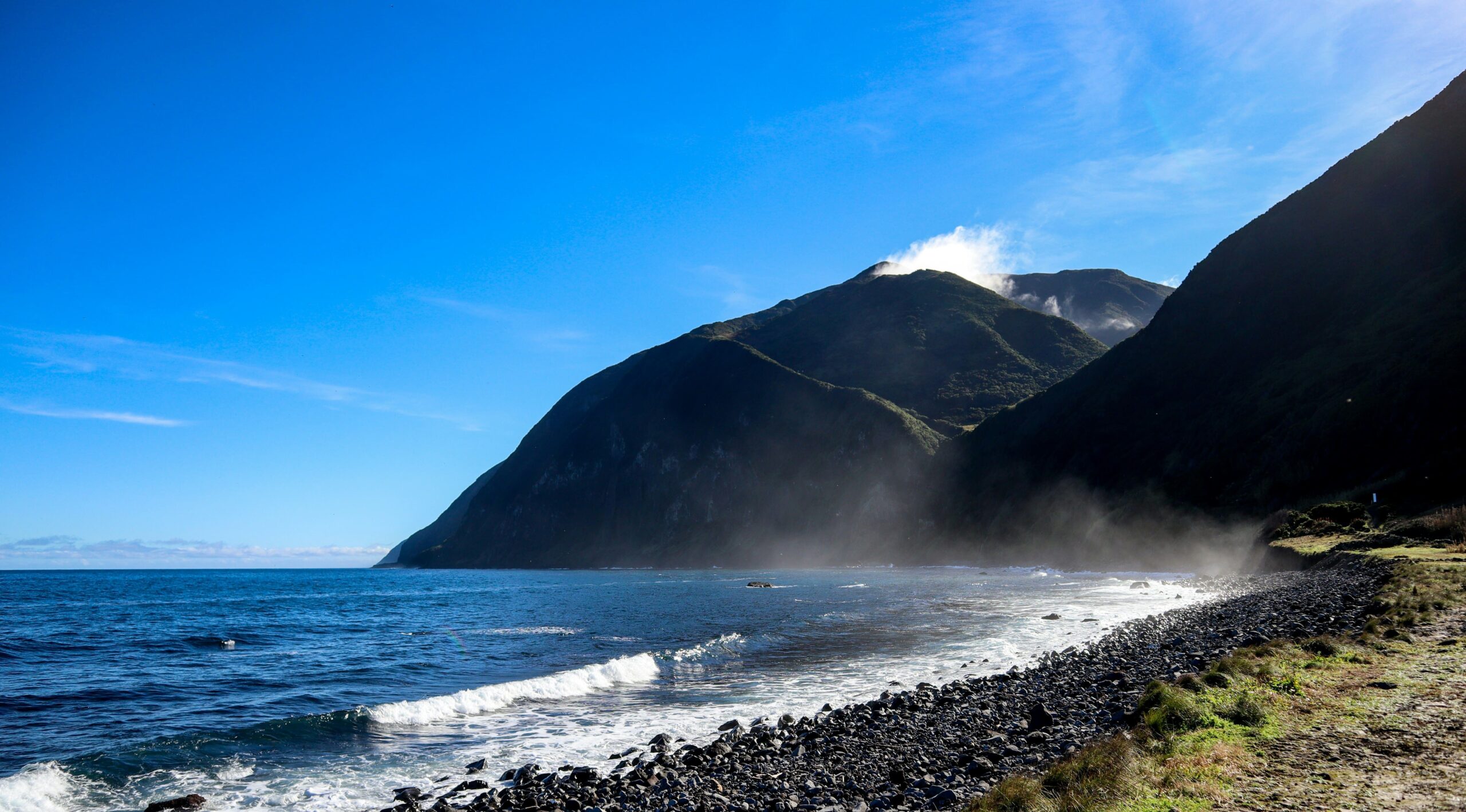
A long, narrow island known for high cliffs, fajãs, walking routes, rural scenery and one of the Azores’ most distinctive island landscapes.
Read guide →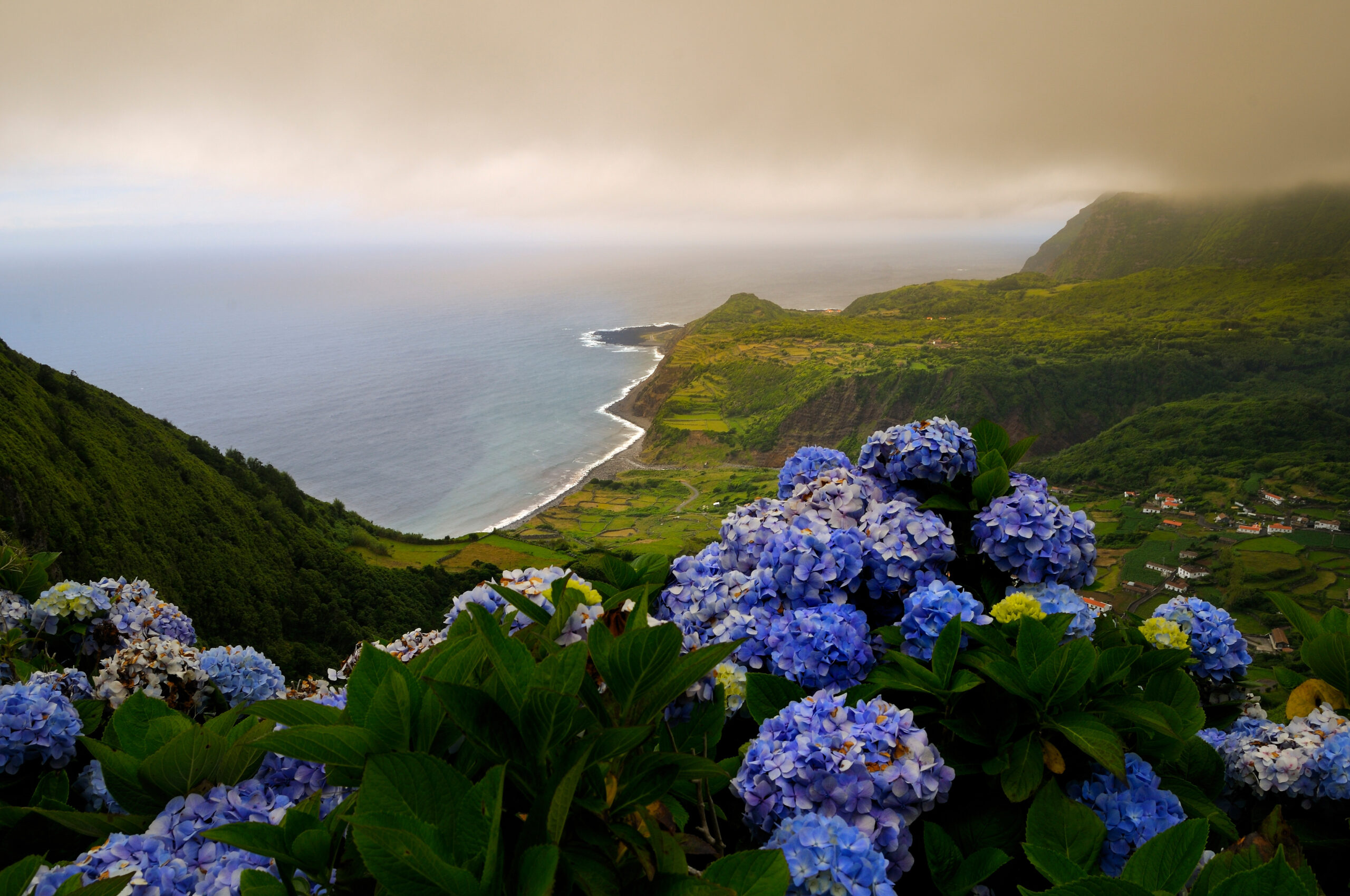
A lush western island of waterfalls, crater lakes, steep green scenery and a remote atmosphere that rewards travelers who allow extra time.
Read guide →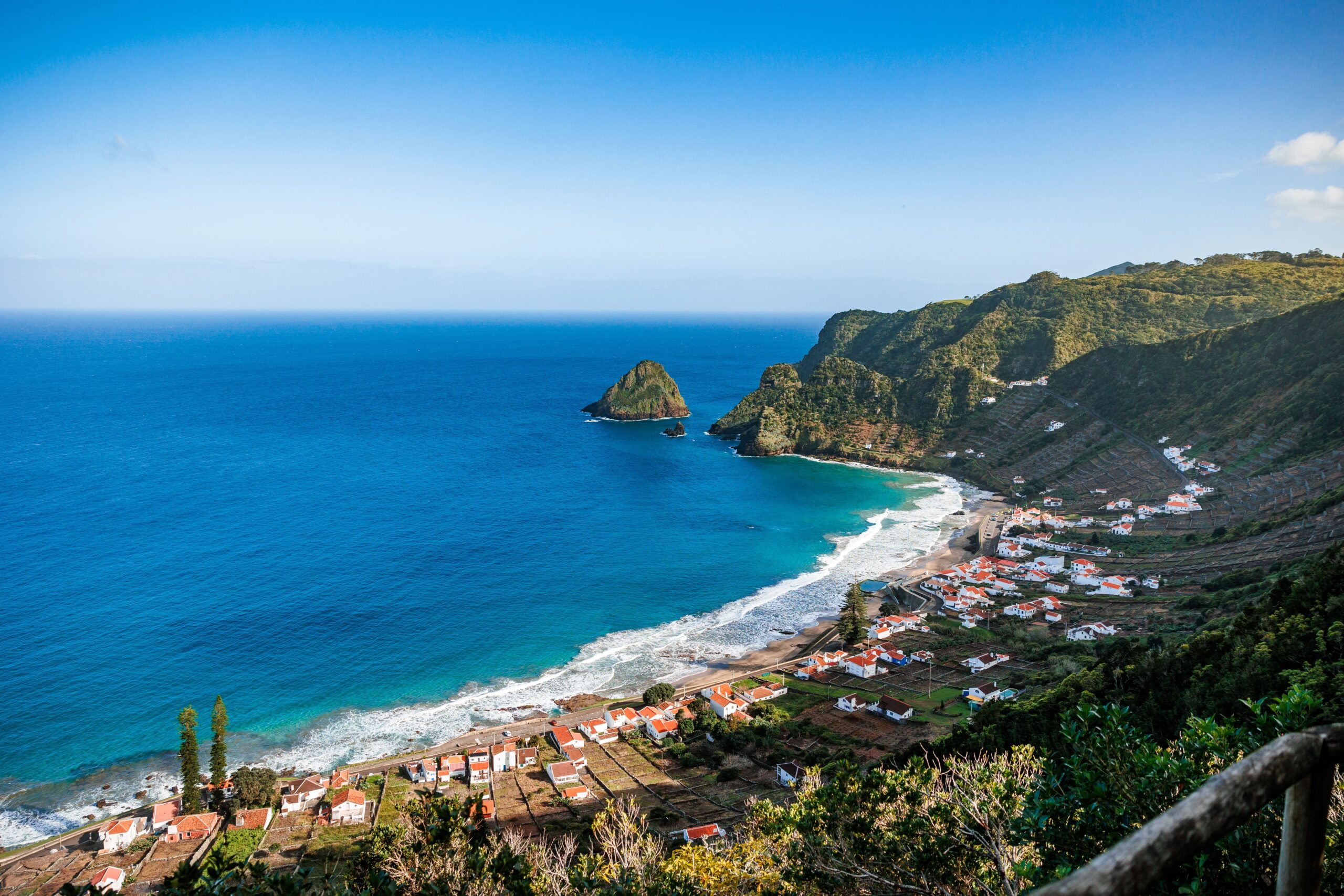
The southernmost Azores island, with a drier character, pale-sand beaches, distinctive geology and a quiet pace.
Read guide →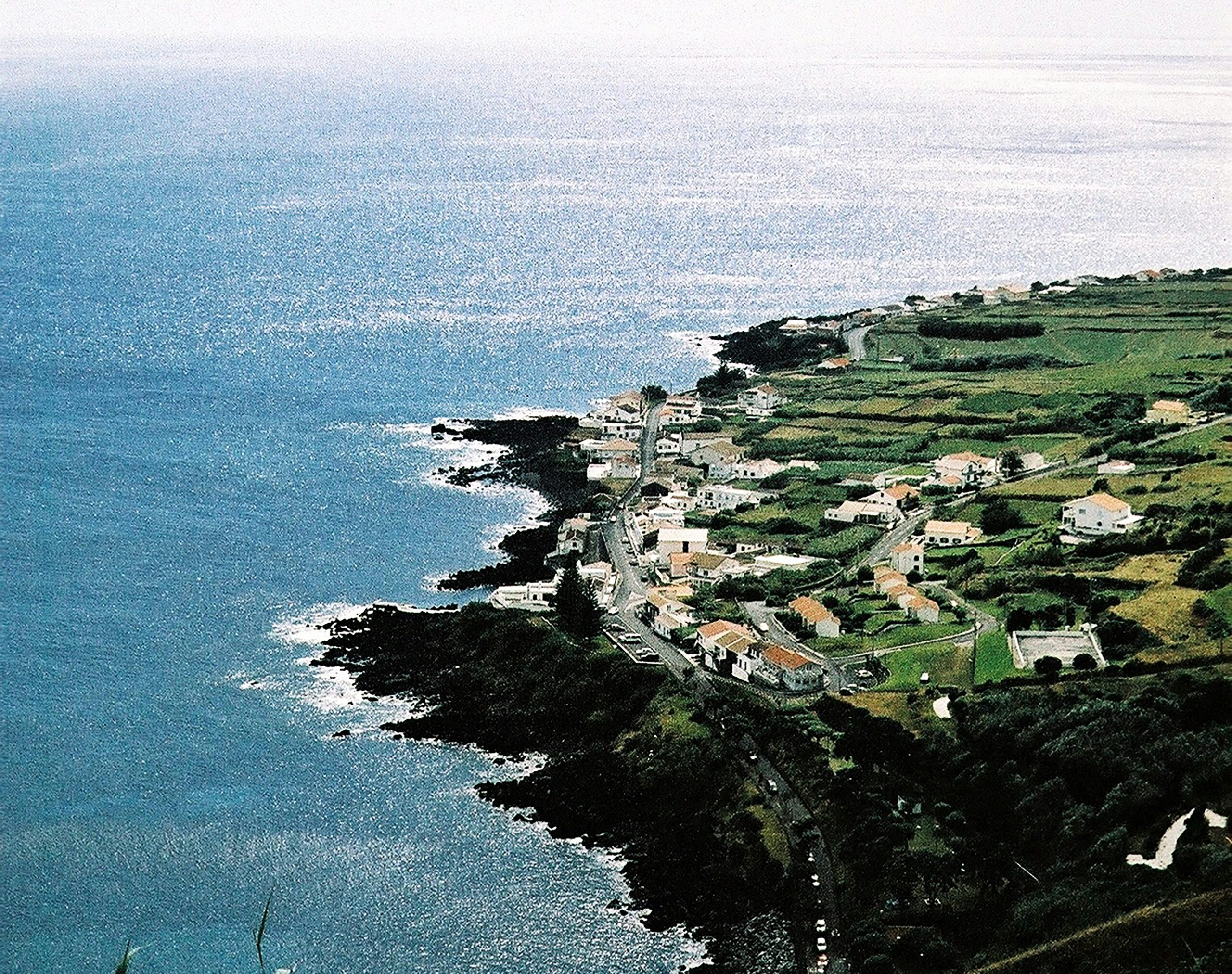
A small Central Group island with whitewashed settlements, volcanic features, quiet roads and an unhurried local feel.
Read guide →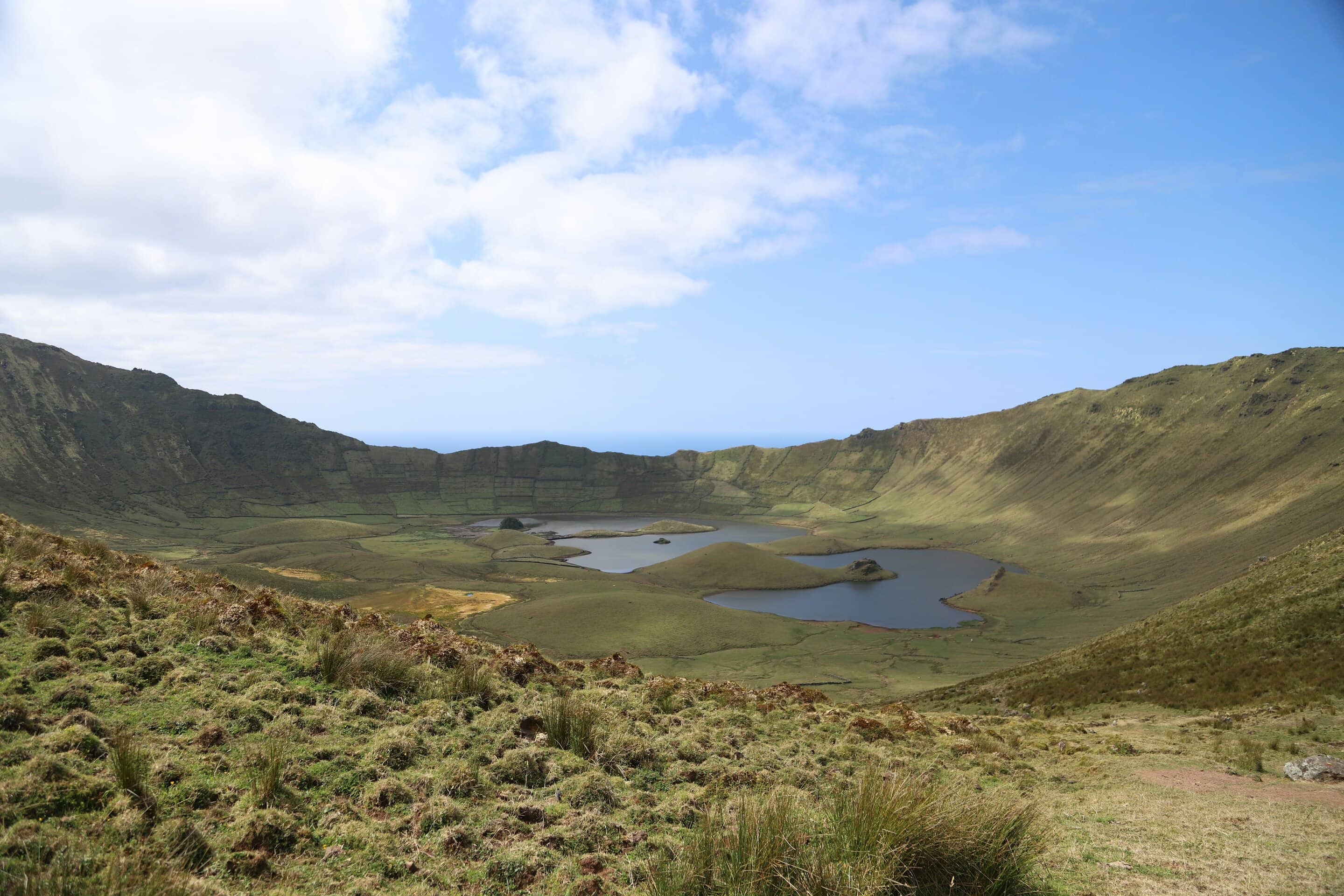
The smallest Azores island, centered on a tiny community and a vast volcanic caldera in the remote Western Group.
Read guide →Build a route that works
Island-hopping works best when your trip length, geography and transportation support it. Adding more islands is not automatically a better trip: every flight or ferry costs useful sightseeing time, and weather can affect connections.
For a first visit, São Miguel gives you the broadest range of scenery and experiences without losing time to transfers. A focused stay on another single island can work just as well when you have a specific interest.
Pair islands with a logical transport connection rather than choosing only by wish list. Pico and Faial are an obvious Central Group combination, while other pairings depend more heavily on seasonal schedules.
Longer trips can support a third island, especially within the Central Group. Flores, Corvo and Santa Maria deserve more deliberate flight planning and extra flexibility rather than being squeezed into a tight route.
A quick way to narrow the choice
Your best match depends on what you want to do, how much moving around you enjoy and how many days you have. These are useful starting points rather than rigid rules.
São Miguel is the most versatile starting point, with crater lakes, hot springs, coastlines, food and the broadest range of visitor services.
São Jorge, Pico, Flores and São Miguel stand out for trails, volcanic terrain, ridgelines, waterfalls and large-scale landscapes.
Terceira is the clearest choice for travelers who want architecture, historic Angra do Heroísmo and a strong cultural layer alongside nature.
Pico and Faial form a natural Central Group pairing for maritime history, whale watching, vineyards, marina life and volcanic landscapes.
Santa Maria, Graciosa and Corvo suit travelers who value a smaller scale, fewer headline sights and more time simply experiencing island life.
The Central Group often gives the most natural island-hopping possibilities, but always verify the flight and ferry pattern for your exact dates before fixing hotels.