
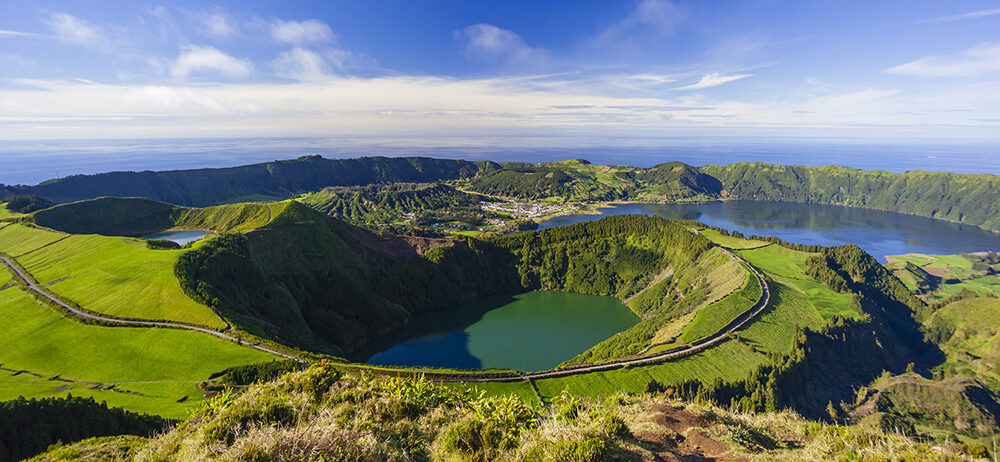
The Azores are an autonomous region of Portugal made up of nine volcanic islands in the North Atlantic. They form one archipelago, but each island has its own landscape, pace, traditions and travel personality. Understanding that bigger picture first makes it much easier to decide which islands belong in your trip.
The archipelago in perspective
Portuguese settlement of the islands began in the 15th century. Their mid-Atlantic position shaped centuries of seafaring, agriculture, migration and connections between Europe and North America. Today that history sits alongside volcanic landscapes, small cities and villages, working farmland, fishing communities and a strong relationship with the ocean.
Start with the three island groups
Eastern Group
São Miguel and Santa Maria. São Miguel is the largest island and the most common starting point for first-time visitors.
Central Group
Terceira, Graciosa, São Jorge, Pico and Faial. These islands create several natural multi-island combinations.
Western Group
Flores and Corvo. Remote, dramatic and especially rewarding when you can keep the schedule flexible.
One archipelago, different trips
A geothermal São Miguel trip, a Pico–Faial stay and a Flores–Corvo journey can feel like three very different vacations.
Meet the nine Azores islands
Understanding the three island groups gives you the geography; the next step is choosing the islands that fit your trip. Our island guides compare all nine islands, then take you deeper into the character, landscapes and practical planning details of each one.
Four decisions shape almost every Azores trip
What makes the Azores different?
The appeal comes from the combination of volcanic landscapes, ocean, rural life, small cities, hiking, geothermal areas, whale watching, local food and the feeling that nature is never far away. The weather is part of the experience, which is why flexible planning matters.
New to the Azores?
Read the travel-basics guide before you start booking. It covers the currency, language, time zone, electricity, entry planning and the everyday details that are easy to overlook.